Magnetic torque transfer
The external stepper rotates a drive magnet, which transfers torque across the sealed tank boundary to the internal film carrier.
Rotate the film through a sealed tank wall—without a mechanical shaft entering the chemistry.
Magnematic is an early, low-cost prototype exploring automatic film processing without giving up practical control. Its defining mechanism is a stepper-driven magnetic coupling: an external magnet transfers torque to the film-holder assembly inside the tank, creating controlled, reversible agitation while keeping the motor and electronics isolated from the wet processing area. Accessible components also provide usable temperature regulation and multi-valve chemistry routing.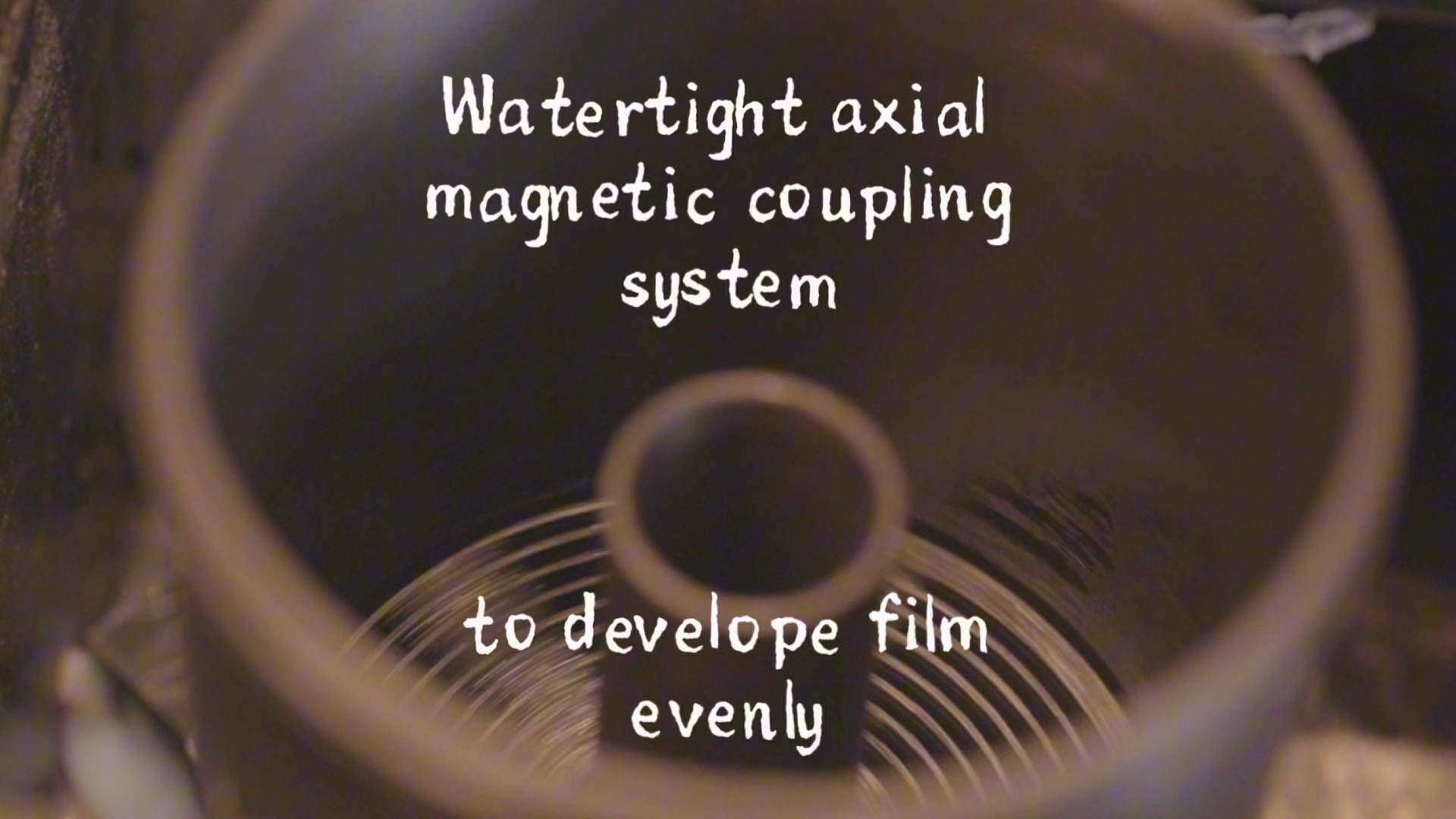
The external stepper rotates a drive magnet, which transfers torque across the sealed tank boundary to the internal film carrier.
PLC control changes speed, direction, and agitation intervals to keep fresh chemistry moving evenly across the film surface.
A cost-conscious set of readily available controls combines practical temperature regulation with multiple valves for automatic chemistry selection and routing.
A stepper motor turns a magnet beneath the processing tank. Its field couples to a matching magnetic element inside the tank, so the film carrier follows the motor without any physical drive shaft piercing the wet enclosure.
The stepper motor produces accurately timed rotation on the dry side of the machine.
Opposing magnetic elements transfer torque through the sealed tank boundary.
The internal carrier turns the film through the chemistry without a penetrating shaft.
The PLC changes direction and speed to create repeatable, even agitation.
Supporting automationMagnematic keeps the build comparatively inexpensive by using accessible pumps, heating controls, valves, and PLC components. The result retains useful temperature control and multi-valve fluid routing for a complete automated cycle, while the defining mechanism remains the magnetic transfer of controlled rotation into the sealed film tank.
Magnematic keeps the build comparatively inexpensive by combining readily available industrial controls, common fluid-handling parts, printed structures, and a portable case. Cost is reduced without removing the functions that make automatic processing useful: temperature regulation, repeatable timing, reversible agitation, and multi-valve chemistry routing.
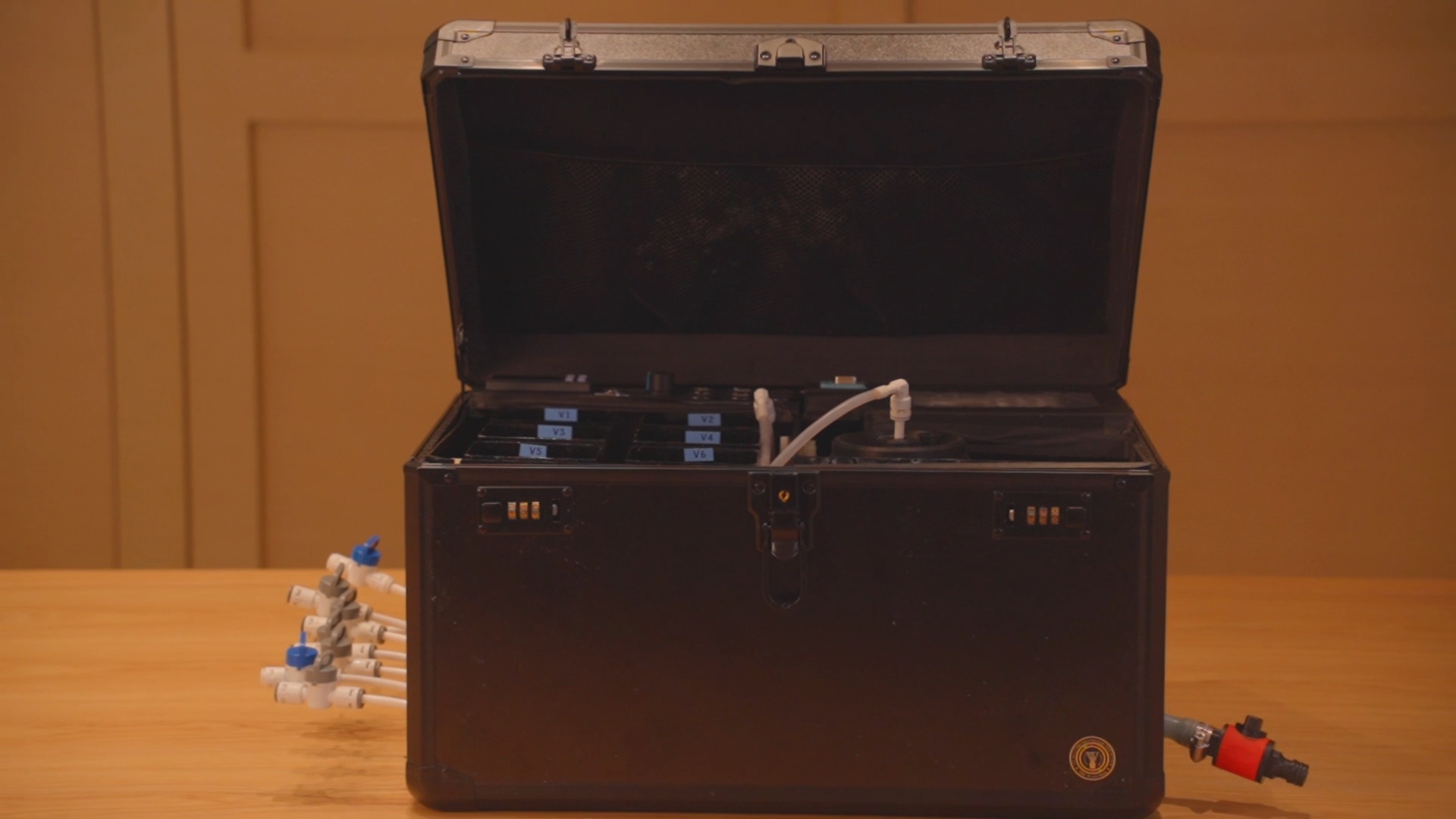
Readily available pumps, valves, relays, fittings, and printed structures keep sourcing and replacement straightforward.
A practical PID heating loop maintains usable process temperature without requiring specialised laboratory hardware.
Several valves automate chemistry selection and fluid movement while retaining a cost-conscious plumbing layout.
The controls, heating, plumbing, and magnetic drive share a reusable lock case instead of a custom manufactured enclosure.
Watch the processor demonstrate its magnetic-coupled rotation, automated fluid handling, and complete film-processing workflow.
Watch on YouTube ↗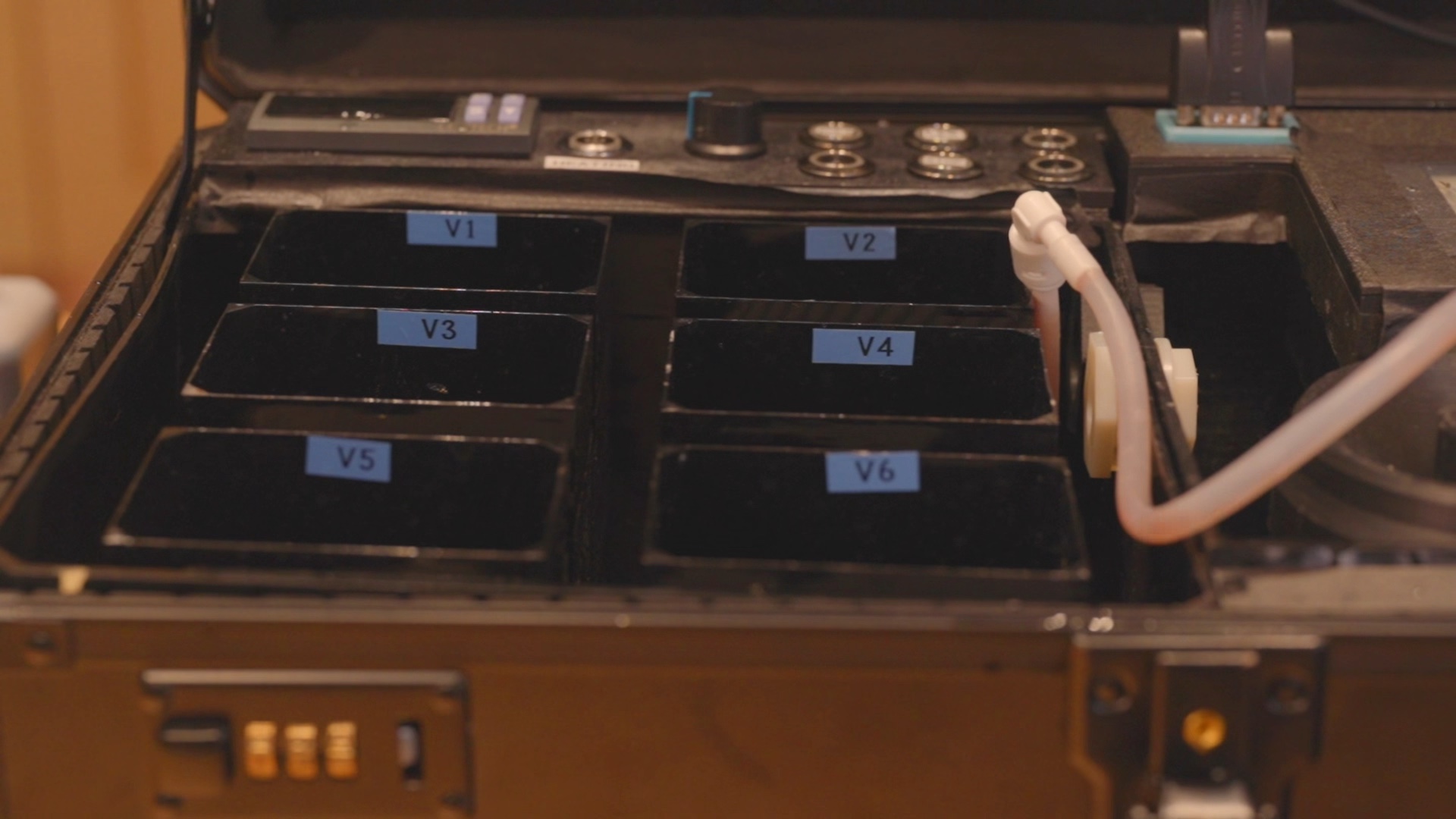
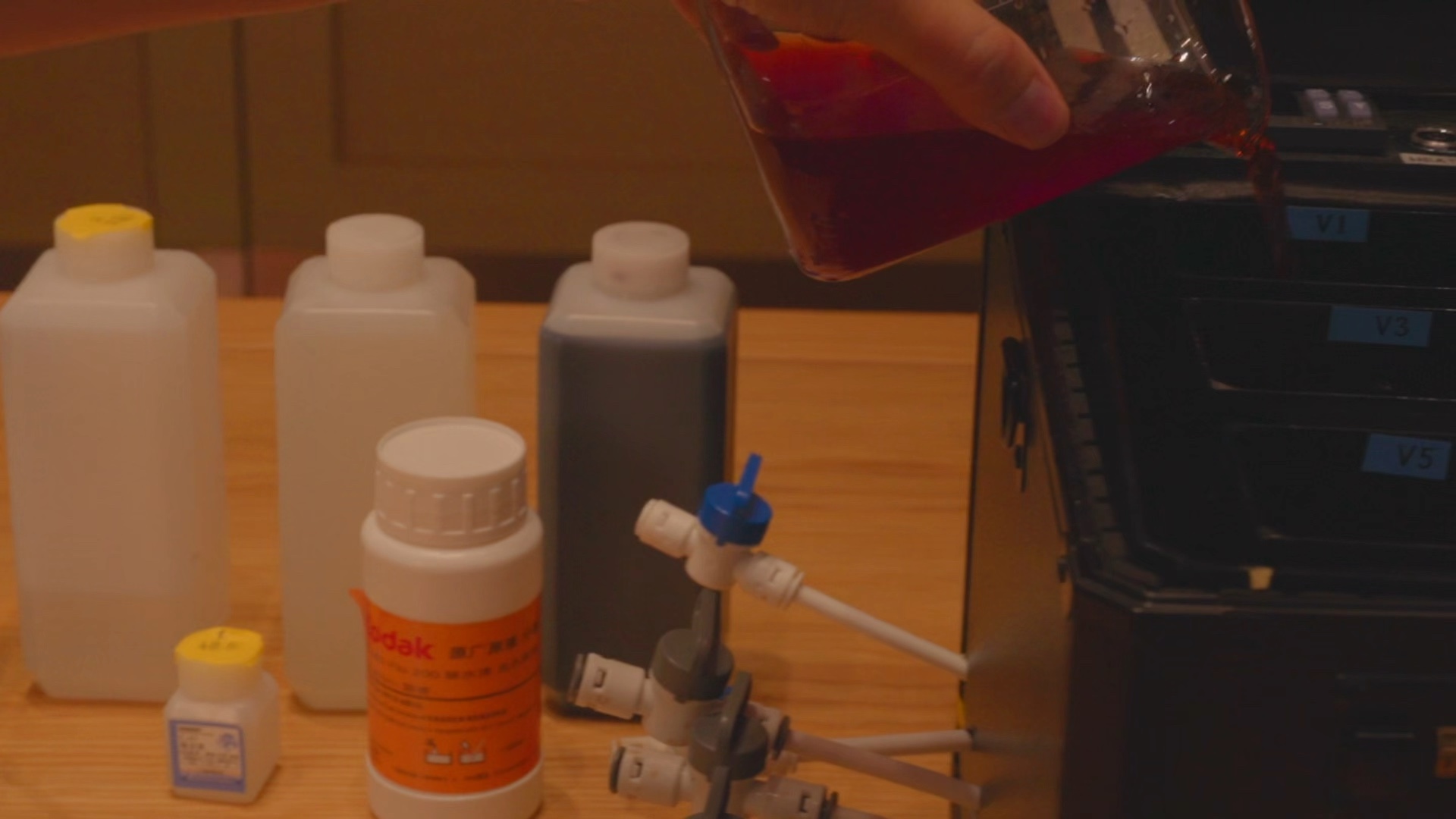
The first architecture brought temperature, time, agitation rhythm, and chemical switching into one controlled workflow.
Pumps, valves, PLC/HMI, PID temperature control, heating, plumbing, and printed structures were integrated into a portable lock case.
The machine completed an automatic colour-film workflow, producing the documented Lucky C200 sample and promotional film.
01Archive the original PLC ladder logic and Modbus maps
02Publish the parts list and case layout as project history
03Document the Lucky C200 processing workflow
04Carry lessons from its magnetic agitation into future open processors